Parts of a Car in English for Kids
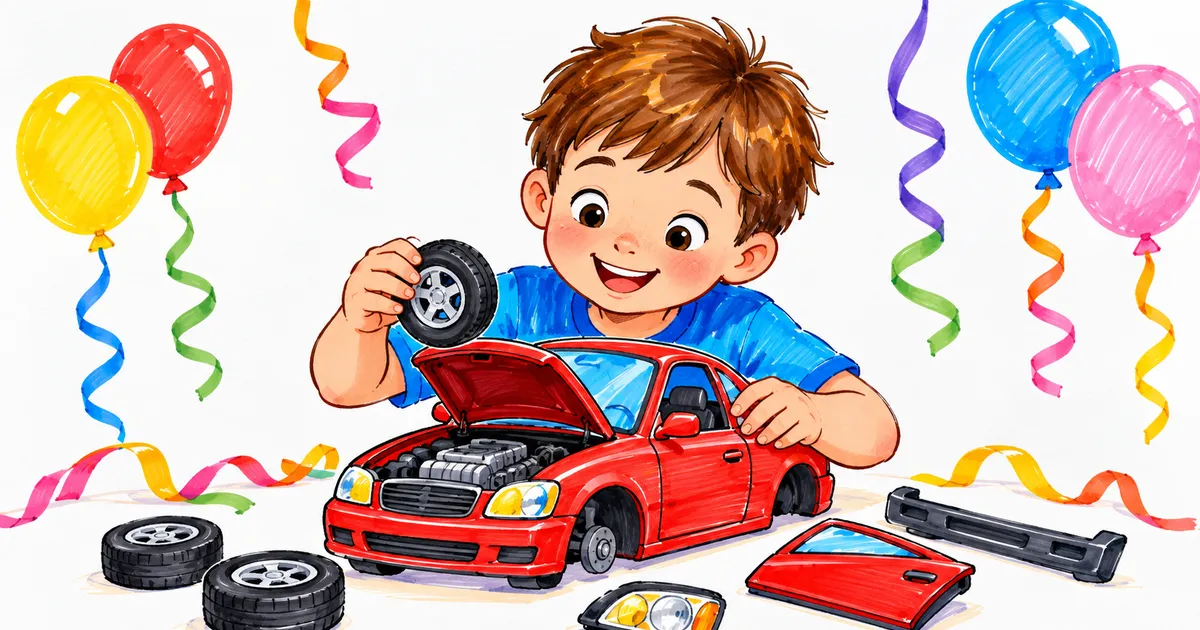
Parts of a Car in English for Kids: Words and Activities covers everyday car parts, actions, and safety phrases. Begin with five visible parts—door, window, wheel, light, and mirror—then add words from inside the car. Children learn through pointing, moving, drawing, and short sentences. Use a parked car, pictures, toy cars, or homemade cards. Practise briefly over a few days, accepting correct British and American forms.
Core Car Words to Teach First
Parts of a Car in English for Kids: Words and Activities should start with objects a child can safely see or touch. Teach nouns in small groups instead of reading the full set. Introduce five to eight words per session, then review earlier vocabulary.
The table separates essential words from later additions. Where British and American English differ, both forms appear. Practise one form, but explain the alternative so your child understands books, videos, and speakers from different countries.
Establish meaning before testing recall. Point to a picture and say, “This is the door.” Then contrast two items: “This is the door, but this is the window.” LearnLink tutors follow this pattern: direct input, guided practice, and short independent answers.
Using the Words in Real Sentences
Single words build recognition; phrases build speech. Use Parts of a Car in English for Kids: Words and Activities for sentences: “The car has four tires,” “Please close the door,” “The bag is in the boot,” or “The wipers move across the windscreen.” Familiar grammar keeps attention on vocabulary.
Questions prompt recall. Ask, “Where is the mirror?”, “What can you see through the window?”, or “Which part helps the driver turn the car?” A beginner may answer with one word. A confident learner can say, “The steering wheel helps the driver turn the car.”
Add position words after the child knows the core nouns: “The headlights are at the front,” “The boot is at the back,” and “The mirror is beside the window.” For multilingual children, show meaning through a picture or gesture. Translation may confirm meaning, but keep speaking the English phrase aloud.
Activities for Different Ages
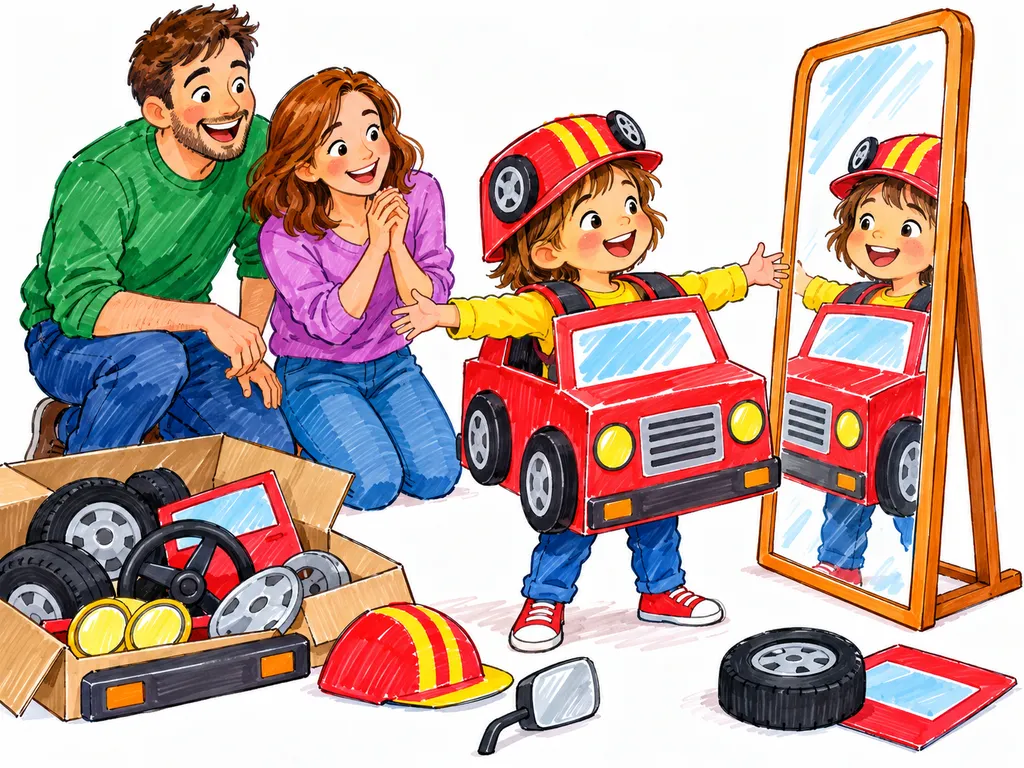
For school-age kids, use a toy car or large drawing. Name a part, ask your child to point, then swap roles. The child can instruct you: “Touch the front tire” or “Open the door.” Maintain a lively pace and stop before fatigue.
For school-age kids, turn Parts of a Car in English for Kids: Words and Activities into sorting. Place word cards under “outside,” “inside,” and “actions.” Children can draw an unusual car, label eight parts, and say: “My car has six round rolling parts, two doors, and large headlights.”
For school-age kids, add precise descriptions and regional terms. Ask learners to compare two cars, explain why passengers buckle up, or write passenger directions. Older learners can compare bonnet and hood, boot and trunk, or indicator and turn signal without marking either form wrong.
Practice Ideas for Home and Online Lessons
Short, repeated practice beats one long vocabulary test. On the first day, teach the words. On the next day, mix pictures and labels. Later, request sentences without labels. Moving from recognition to recall shows whether the child can use the vocabulary in conversation.
Three-minute Car Challenge
Choose six car parts. First, your child points while you name them. Next, you point and your child names them. Finally, request one sentence about each part. Award one point for the word and one for an accurate sentence. Repeat another day with the cards reordered.
When practising Parts of a Car in English for Kids: Words and Activities near a vehicle, use a safely parked car under adult supervision. The adult controls the keys, doors, and surroundings. Children need not sit in the driver’s seat or touch pedals; pointing through a window or using photographs supplies enough context.
Try memory pairs, a labelled-car puzzle, or a listening race. Give three clues: “It is inside the car,” “The driver holds it,” and “It turns left and right.” Your child identifies the steering wheel, then creates clues for you.
Common Mix-ups and How to Correct Them
Some car words look alike in pictures but name different objects. Correct meaning through contrast: “The wheel is the whole round part; the tire is the rubber around it.” Then ask the child to point to each object.
Pronunciation needs attention. Children may shorten the phrase steering wheel to just steering or separate windshield too strongly. Model the full phrase, ask the child to repeat it, then place it in a sentence. Ignore accent differences when listeners can understand the word.
- Practice naming five car parts with children ages six to nine today.
- Use toy cars to contrast metal rims, rubber tires, doors, and windows.
- Correct one mix-up gently, then ask your child to repeat the word.
- Draw a simple car and label six parts together from memory.
- Review the labels after dinner using a two-minute pointing game.
When a word has several meanings or pronunciations, Cambridge Dictionary is a useful check before turning it into child-friendly examples.
Frequently Asked Questions
How Many Car-part Words Should a Child Learn at Once?
For Parts of a Car in English for Kids: Words and Activities, begin with five to eight words shown in one picture. Practise phrases before adding another group. After learning door, window, tire, light, and mirror, introduce roof, headlight, safety belt, and steering control. Follow the child’s pace instead of enforcing a daily total.
Should My Child Learn British or American Car Words?
Use the variety your child encounters most, but introduce regional alternatives. British English uses bonnet, boot, windscreen, and number plate; American English uses hood, trunk, windshield, and license plate. Both sets are valid. Keep one form during an activity, then compare pairs to support understanding across regions.
Can We Practise These Words Without a Real Car?
Yes. A toy car, photograph, drawing, or cardboard model offers enough visual support. Your child can point, label parts, follow instructions, and explain each part’s function. Pictures show the whole vehicle at once. With a real car, park safely and let an adult control the keys and doors.
What Should I Do If My Child Remembers the Words but Cannot Use Them?
Move from naming to sentence frames. Start with “This is the ___,” then use “The ___ is at the front” and “We use the ___ to ___.” Ask one question at a time and pause before helping. Reuse the words in a drawing, guessing game, and conversation to practise recall in different settings.
- Start with five visible car parts and check that your child can point to each one.
- Practice each word in a short phrase before asking for a complete sentence.
- Try the vocabulary again on another day with shuffled pictures or new clues.
A short one-to-one lesson can show what level and pace fit your child — book a trial English lesson.
Stay updated on our latest tips and resources by following us on Instagram LearnLink.